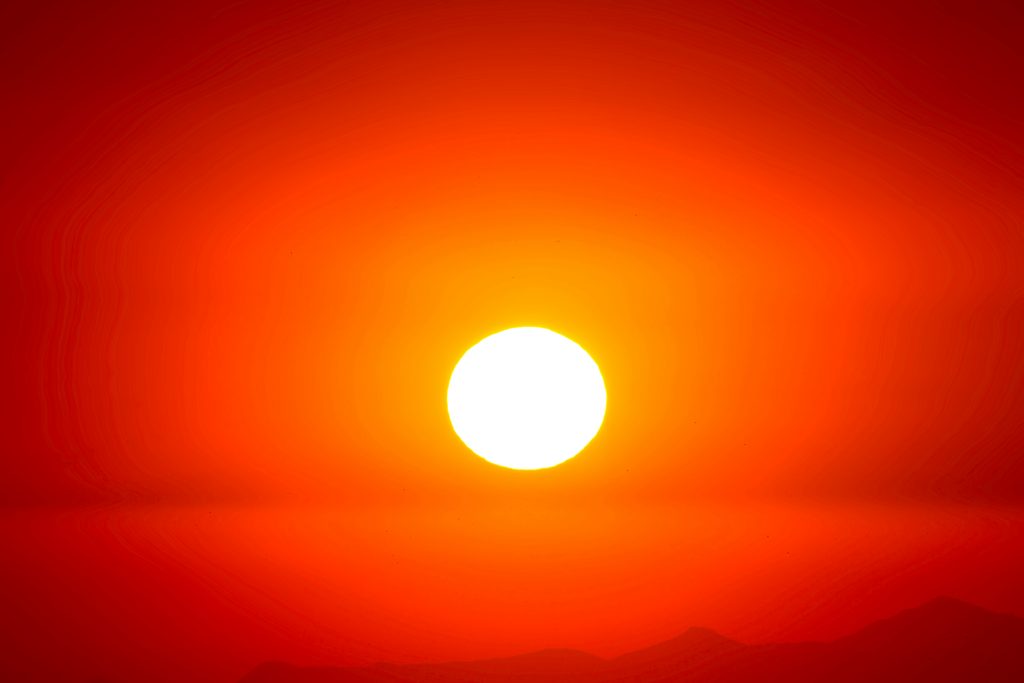
The summer of 2026 in the Northern hemisphere has been brutal. Heatwaves, drought, wildfires, and the Nepalese/Tibetan glacial collapse and floods have felt like something out of a disaster movie.
We’re also going through an El Nino. Many people have attributed this summer’s extreme weather to this phenomenon. However, a team led by the world’s foremost climate scientist, Dr James Hansen, believes that the extreme weather is a direct result of anthropogenic climate change. Whilst they acknowledge that the El Nino is one of the strongest we’ve ever had, they say that, “increasing global climate anomalies, poleward shifting of climate zones, increased rainfall extremes, more rapid flash droughts and fires, and marine heat waves are a result of accelerating human-made global warming. The abnormal El Nino strength is itself likely human-driven.”
Thus, this summer’s horrendous extremes can be directly linked to our ongoing record-breaking greenhouse gas emissions.
Before exploring some of these catastrophic extremes, it’s worth keeping in mind the words of climate scientist, Kevin Anderson, who says that, “this is the least extreme weather that [we] will ever live through. It’s going to get worse and worse every single year until we stop burning fossil fuels.”
Heatwaves
The UK has had five heatwaves so far this summer, with temperatures exceeding 38C. It goes without saying that this summer is set to be the warmest on record in the UK. France had one of its longest stretches of extreme heat on record, which spanned 17 days. Parts of Europe have exceeded 40C temperatures on multiple occasions over the last few months.
June was the hottest on record for Western Europe according to the WMO. Meanwhile, July tied with 2024 for the warmest on record for the world.
Drought
Wales is known to have it’s fair share of rainfall brought in by Atlantic weather systems. But this summer, the entire country was officially declared to be in drought as a result of the extreme heat and lack of rainfall that gripped large parts of the UK. Over 70% of England was also declared to be in drought, which was followed by a ban on the use of hosepipes (affecting over 23 million people). England as a whole only had 7% of it’s average rainfall for the month of July. This has had a knock-on effect on farming, with wheat, cereal, and oat yields coming in far lower than anticipated.
Drought also hit Puerto Rico and the US. In Europe, the Rhine and Po rivers have receded to record low levels. Meanwhile water levels in the Danube have fallen so much that Hungary’s nuclear power station is struggling to obtain enough water from the river to keep it cool.
Wildfires
In August, over 590 wildfires were burning through Canada. In August, Spain had burned a record area by that point of the year. France has already experienced a record number of wildfires for any year on record. According to the Guardian, the EU had the most severe year for fire weather on record. Across the region, 1,750 wildfires were reported by August. At the time of writing in early September, the figure rose to 1,913.
July saw a record number of wildfires in England and Wales, with 393 reported. By August, it was declared that the UK had recorded the highest number of wildfires in history, after exceeding last year’s total of 1,017. The situation was so bad, that people across the country received an emergency alert from the government urging them to avoid disposable barbecues in dry areas, fireworks, and any other type of open flame which could start wildfires.
Nepal-Tibet Mudslide
An absolutely horrific mudslide destroyed settlements in Nepal and Tibet in August. Watching footage online was like watching a disaster movie unfold, and I had to triple check news reports to ensure that I wasn’t witnessing AI-generated clips; such was the scale of the disaster that it beggared belief.
Detailed analysis is ongoing, but the current view is that warming temperatures (as a result of the climate crisis) led to the collapse of a large glacier and this in turn led to ice, rock, and debris surging down the valley which destroyed everything in its path. It’s estimated that 900 people lost their lives, with 4,400 people still missing.
Conclusion
Politicians are still failing to regulate the industries responsible for pushing us towards climate catastrophe. Fossil fuel corporations still chase record profits. As a result, humanity is becoming firmly locked into a downward spiral from which we may not be able to escape as we hit climate tipping points.
Summer 2026 has given us a taste of the climate chaos in the pipeline. As Kevin Anderson made clear, every year going forward is likely to get worse and worse. In the future, the summer of 2026 may be remembered as being unremarkable compared to the devastation that we’re heading for.
Without big structural, regulatory, and legal changes, climate breakdown will continue to accelerate and humanity will end up annihilating itself.
I believe we seriously need to consider changing the way we conduct governance, because politicians are pushing us towards the brink. Permanent participatory democracy might be one of our few remaining options to salvage the survival of our civilisation during this tumultuous century. We would be wise to give this concept all due consideration as expediently as possible, given what’s at stake and the precious little time left for meaningful action.
I’ve been writing about the climate emergency since 2016, and the AI crisis since 2023. I write all my own work, without the use of AI. I don’t publish on any other paid platforms, and my blog remains completely free to read. If you’ve found my writing informative and if you’d like to support my work, I’d be really grateful if you did so here. Thank you.
My cli-fi children’s picture book, Nanook and the Melting Arctic is available from Amazon, including Amazon UK and Amazon US. My eco-fiction children’s picture book, Hedgey-A and the Honey Bees about how pesticides affect bees, is available on Amazon’s global stores including Amazon UK and Amazon US.