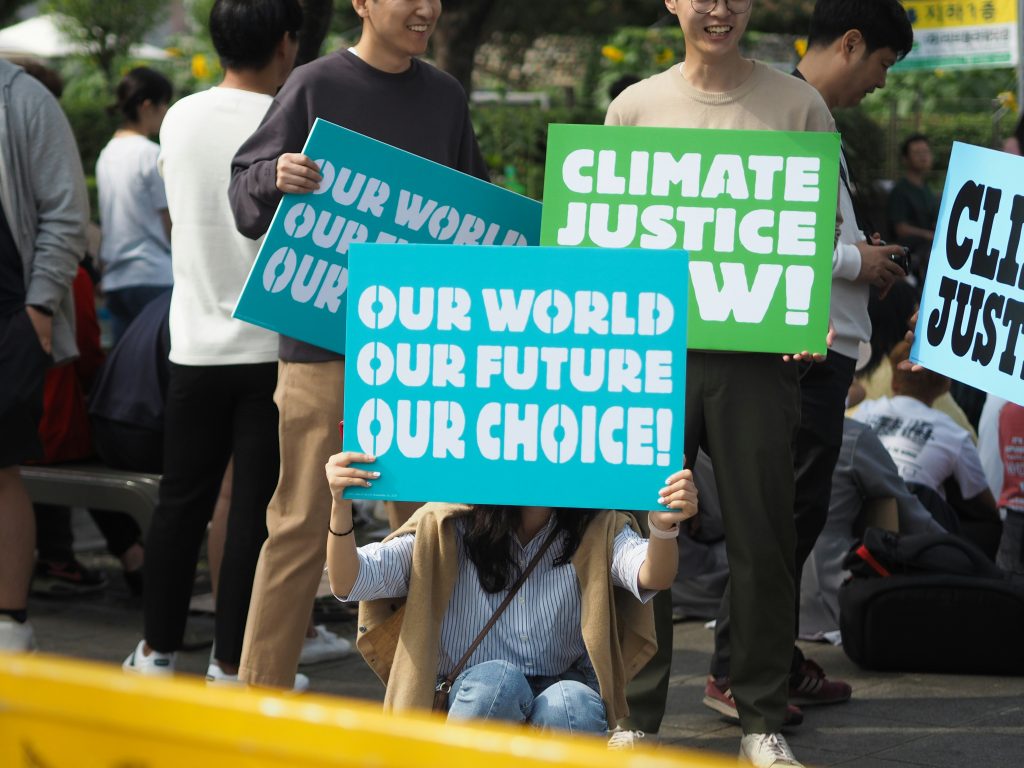
The world is in an extremely uncertain place. Conflict is spreading, polarisation is increasing, and the climate and AI crises have the potential to simultaneously overwhelm society. This combination of problems is often grouped together and called the ‘polycrisis.’ The people who’ve caused or mismanaged the polycrisis are politicians. That’s a slight issue given that nearly 8.3 billion people are governed by politicians.
But, is there an alternative? How can nations be led, if not through representative democracy (where we elect politicians to govern us)? The good news is that an alternative does exist in the form of participatory democracy – where citizens participate in decision-making.
Citizens’ assemblies are an example of participatory democracy, and have been used for millenia, originating with the Athenian model developed by Cleisthenes in Ancient Greece. Modern citizens’ assemblies are usually arranged around a certain topic, and members of the public are randomly selected (typically through a process known as ‘sortition’) to hear from experts on the matter, before deliberating on the topic. After which their combined recommendations are put to a vote, and those that are passed by a majority are included in a final report, which is then presented to the people who commissioned the assembly. These assemblies have been run around the world, and have produced some incredible recommendations. When the topic for discussion is climate change, these assemblies are often called ‘climate assemblies.’
I came across a fantastic book by Graham Smith called We Need To Talk About Climate: How Citizens’ Assemblies Can Help Us Solve The Climate Crisis. Graham leads the Knowledge Network on Climate Assemblies (KNOCA), and is therefore in a prime position to explain more about how they function and how we can utilise them to tackle one of the greatest challenges we face. I highly recommend this timely book, which shows what’s possible when citizens are given a platform.
Why climate assemblies?
I’ve previously written about what climate assemblies are here, so I’ll refrain from doing so again. Instead, I’ll focus on some of the interesting points that Graham raised in his book.
One of which is that climate assemblies enable ‘slow thinking.’ Graham explains this as “a more reflective and considered form of reasoning and judgement.” In other words, people move away from their instinctive reactions, or perhaps their reactions that are aligned with certain political or ideological outlooks, and instead spend time listening to experts and learning together, which allows for deeper and more reasoned thinking. This produces more meaningful recommendations.
Graham quotes a study led by Jonas Lage, which compared National Energy and Climate Plans (NECPs) to recommendations from national climate assemblies. The first pattern they identified was that assemblies go further in wanting to reduce consumerism (labelled as ‘sufficiency’ policies). The second was that they were more in favour of regulating those responsible for emissions. What this shows is that citizens are prepared to make the tough, yet necessary decisions to tackle this issue. Whereas politicians may be reluctant to approach these topics for fear of harming their poll ratings.
Another interesting point is that climate assemblies have a positive impact on the people who take part. Graham writes that their political efficacy increases, and that they seek to engage more with the issue. This change in behaviour continues well after the assembly has finished, with one survey showing that this commitment to climate action was still strong after two years.
Participants who were ‘very concerned’ about climate change stood at 46% at the start of the assembly. This increased to 56% by the end of the assembly, and rose again to 74% two years after the assembly had finished. Thus, climate assemblies can be transformative for participants.
Climate assemblies in practice
Europe has hosted more than a dozen national climate assemblies, with a further 200 citizens’ assemblies touching on climate change in one form or another. A global assembly on the climate emergency was also run a few years back, and I briefly mentioned this in my previous climate assembly blog.
Germany ran the largest national climate assembly with 160 participants, while Finland had the smallest with 33 people taking part in a Citizen’s Jury on Climate Action (a citizens’ jury is similar to a citizens’ assembly, but they are typically smaller in size and sometimes involve more deliberation between members). In terms of recommendations that are presented to policy-makers at the end of an assembly, Ireland had the smallest number with 13 recommendations, while Spain topped the list with 172 recommendations.
Two notable climate assemblies mentioned in We Need To Talk About Climate are the French and UK national assemblies.
President Macron commissioned a climate assembly which was held in 2019 with 150 people taking part. Their goal was to look at how France could cut emissions by more than 40% before 2030. At the end of the assembly a report with 149 recommendations was presented to policymakers, with proposals on new regulations, laws, as well as suggestions for referendums. How did the government respond? It’s said that they adopted 85% of recommendations, which is an incredible outcome given how contentious the topic of the climate crisis continues to be (despite mountains of scientific evidence compiled over decades).
In the UK, six parliamentary select committees commissioned Climate Assembly UK to examine various policies areas. A full case study of this assembly, including videos is available on my previous post. This assembly proved to be very useful for the Climate Change Committee, which used the assembly’s recommendations as a basis for their Sixth Carbon Budget. They were so impressed with the assembly, that they have since explored other ways of incorporating deliberative processes into their work, such as a citizens’ panel exploring decarbonisation in the home.
Climate assemblies can have meaningful impacts when politicians agree to implement recommendations and listen to the will of the people. However, problems tend to arise when politicians ignore outcomes of assemblies, which begs the question – why won’t they listen to the people who they are duty bound to represent?
Participatory democracy as a route forward
We can’t escape from the fact that politicians simply aren’t taking the necessary steps on the climate crisis, the AI crisis, or many of the other issues that comprise the polycrisis.
As Graham rightly says, “To effectively address the climate crisis – reducing our greenhouse gas emissions and navigating the perils of a warming world in ways that realise climate and ecological justice – will require a restructuring of our political system. Could citizens’ assemblies be a fundamental building block for that redesign? A protype for more inclusive, democratic, participatory and effective forms of climate governance? The answer is yes.”
We know what doesn’t work, and now thankfully we also know what does work. If we’re going to navigate a route through this critical century, I believe one of the best ways of making this happen (perhaps one of the only ways) is through citizen-led participatory democracy. That will mean redefining how we do democracy as well as our approach to governance. And this is something that needs to happen urgently.
Wider support already exists for this. Graham quotes the European Commission, who say that, “game-changing policies only work if citizens are fully involved in designing them… Citizens are and should remain a driving force of the transition.”
Change is slowly starting to take shape. Brussels and Milan took the bold step of introducing permanent climate assembles in 2022. The annual assemblies produce recommendations that aid decision-making in both cities. The assembly in Brussels produces new policy plans, meaning that it’s linked to the executive branch of government. Whereas the Milan assembly reviews and evaluates policies that are already in place, and is therefore more administrative in nature.
These permanent assemblies are an important evolution, because as Graham says, no single assembly is likely to fix the climate emergency in one go. Rather permanent assemblies are needed to monitor, evaluate, and propose new recommendations on an ongoing basis as knowledge improves, governments change, and societal attitudes shift. Whilst Brussels and Milan might be leading, Rouen is not far behind with similar plans, and Catalonia and Copenhagen also seek to follow suit. This is the direction we need to be heading in, but we need to be adopting permanent assemblies and participatory democracy much quicker around the world.
Aristotle once said that democracy is based on sortition (randomly choosing citizens to participate in these types of processes), but that elections are linked to oligarchy – which might be one of the reasons we’ve struggled through so many crises that have been created or ignored by elected politicians.
The time has come for citizens to lead and change the world. For our collective future may just depend on it.
I’ve been writing about the climate emergency since 2016, and the AI crisis since 2023. I write all my own work, without the use of AI. I don’t publish on any other paid platforms, and my blog remains completely free to read. If you’ve found my writing informative and if you’d like to support my work, I’d be really grateful if you did so here. Thank you.
My cli-fi children’s picture book, Nanook and the Melting Arctic is available from Amazon, including Amazon UK and Amazon US. My eco-fiction children’s picture book, Hedgey-A and the Honey Bees about how pesticides affect bees, is available on Amazon’s global stores including Amazon UK and Amazon US.