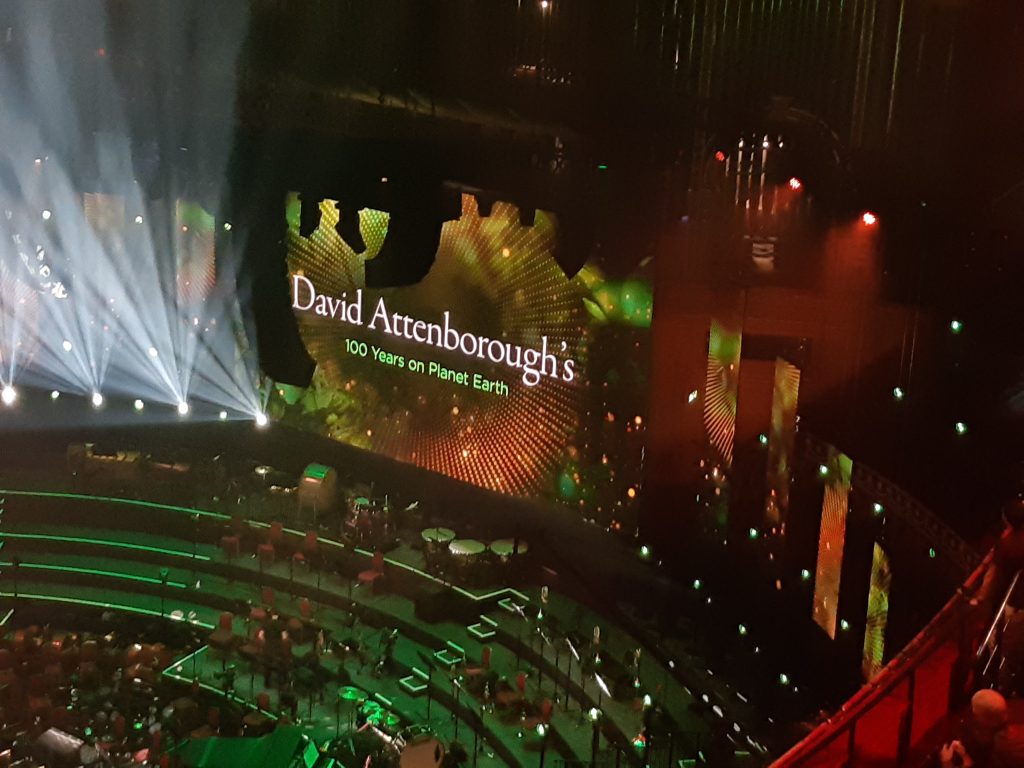
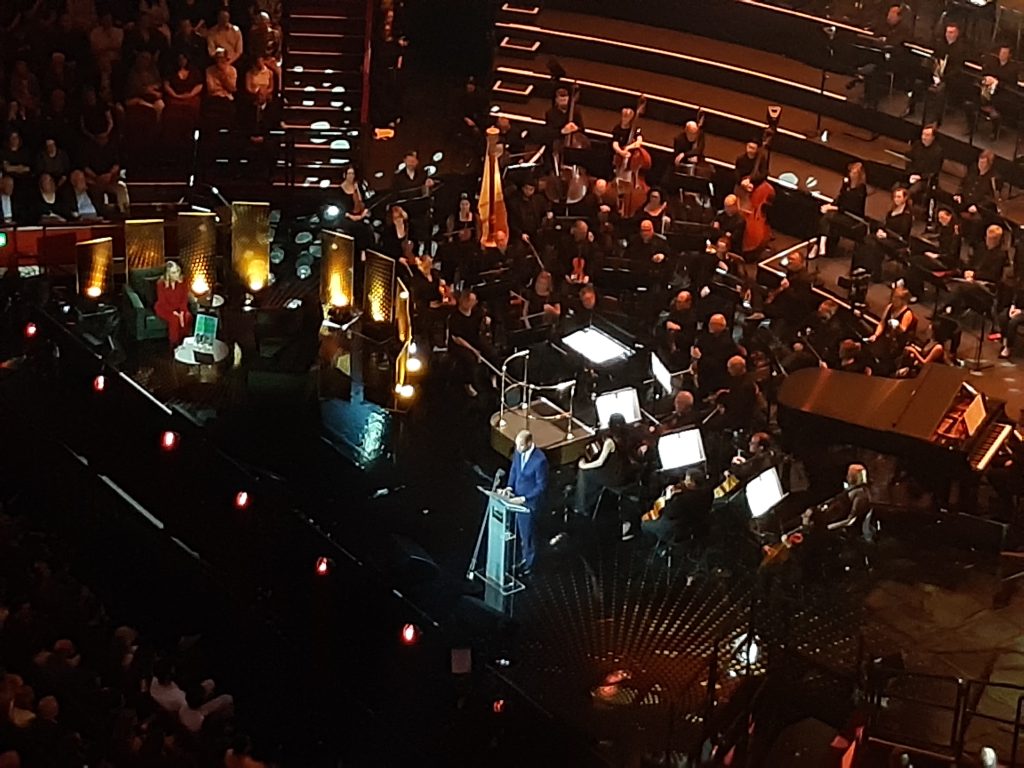
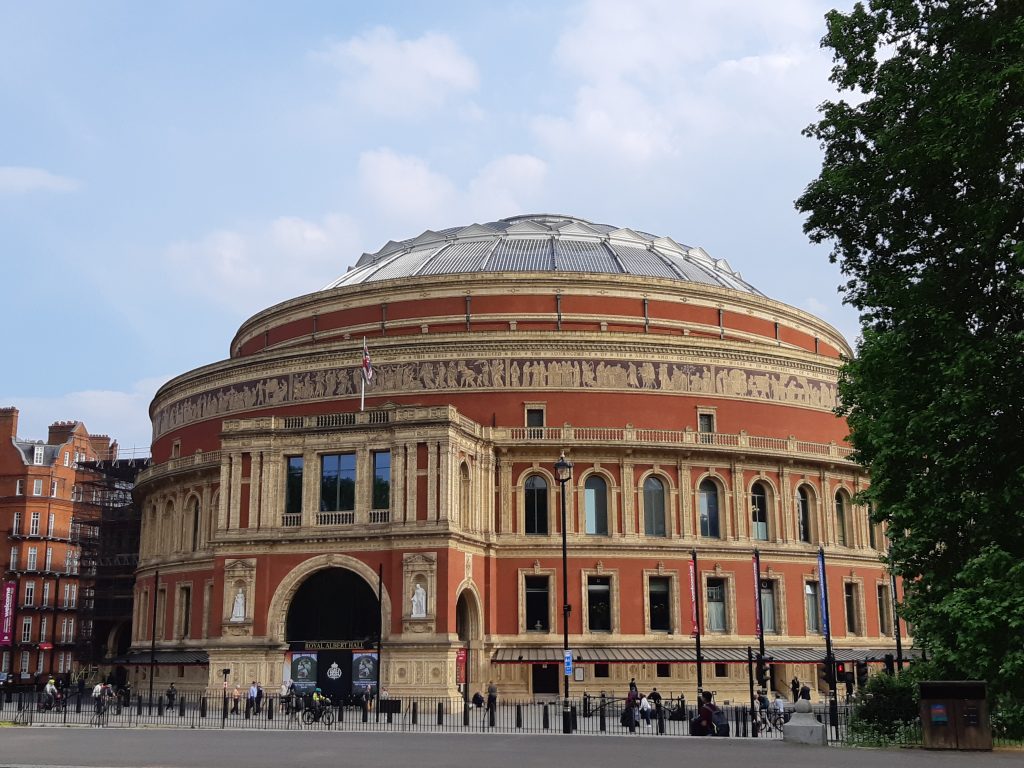
On Friday 8th May 2026, I attended Sir David Attenborough’s 100th birthday celebrations at the Royal Albert Hall, for the televised programme, David Attenborough’s 100 Years on Planet Earth.
The evening brought together presenters including Michael Palin, Chris Packham, and Steve Backshall, alongside musicians who’d produced scores for his series such as Dan Smith (from Bastille), and Sigur Rós. David Attenborough was in attendance and watched the show alongside Prince William (who later delivered a speech in Attenborough’s honour).
One of the best parts of the evening was a video of King Charles writing Attenborough his centenary birthday card and having it delivered to his home in a very unique way!
A small favour to ask, if this post is in any way useful and if you’re open to the idea and able to, I’d greatly appreciate any donation here. I’ve been writing for over a decade (no AI, all my work is human-made) and I keep all my posts free for anyone to access them; donations are the only money I receive for this writing.
Attenborough has been one of the most prominent voices for the natural world and it’s difficult to think of a broadcaster who has had more of an impact in educating people about our planet. It’s fair to say that there’s no one quite like him and we’re incredibly lucky to have him at the forefront of documentary making – something he’s still doing with a century of life behind him. In the last 10 years alone, he’s worked on 18 series! A phenomenal workrate for anyone, never mind someone in their nineties. That in itself is testament to how much he loves his work, and nature.
My favourite series was Planet Earth, the first of his documentaries to be filmed entirely in high-definition (HD). It felt awe-inspiring watching that as a teenager, and it wasn’t long after that when I became very concerned about the climate crisis, and ended up on the path I’m still on today.
Sadly, in recent years I’ve struggled watching his documentaries because I’m reminded that much of the natural world that Attenborough has brought to our screens over the last six decades has either been lost or is in the process of being lost.
Even Attenborough has had similar feelings; reflecting on this matter in his book, A Life on Our Planet, he says that despite him feeling like he was in pristine wilderness when making these documentaries, he now realises he was in places that were already “emptying.”
In A Life on Our Planet, he writes about some of the environmental damage humans are causing, including:
- 30% of fish stocks are now at critical levels
- Almost half of shallow coral reefs have been lost
- Coral bleachings occur nearly every year
- Mangroves and seagrass beds have decreased by over 30%
- 1.8 trillion fragments of plastic litter the Pacific garbage patch
- 90% of seabirds have plastic inside their stomachs
- 50,000 dams have impacted the flow of rivers and species migration
- 80% of animal populations in freshwater ecosystems have been lost
- 15 billion trees are cut down each year
- Rainforest coverage has shrunk by half
- Insect populations have fallen by 25% in the space of three decades
- In 1937, the wilderness remaining in the world was 66%. As of 2020, this had dramatically shrunk to just 35%
In their Living Planet Report, the WWF says that between 1970 and 2020, wildlife populations decreased by an average of 73%. In 2010, the world assembled in Aichi, Japan and agreed 20 targets to halt biodiversity loss. A decade later in 2020, not a single one of those targets had been met.
When Attenborough was born in May 1926, CO2 concentrations in the atmosphere were 305ppm. At the time of writing, CO2 levels stand at 430ppm. The safe level was 350ppm, and anything over 400ppm puts us in very dangerous territory. Despite 38 years of warnings on the climate crisis, and 30 failed annual COP climate summits, the situation is getting worse with record amounts of greenhouse gases being released.
Leading scientists agree that one of the world’s largest ocean conveyor belts may reach a tipping point as early as 2050, causing disastrous climate consequences, alongside further tipping points. Others believe that we are at risk of passing a point of no return. Herein lies one of the only criticisms I’ve ever heard about Attenborough; that he waited until very late in the day to begin speaking honestly about the climate and ecological crises. Who knows what would’ve happened if he (one of the most trusted voices on nature and environmental matters) had done so sooner?
But, rather than ending on a bleak note, I’d like to end with a message of hope that Attenborough shared at the COP26 summit: “In my lifetime, I have witnessed a terrible decline. In yours, you could and should witness a wonderful recovery.”
Political will evidently isn’t there. But, we as citizens can usher a new future into existence if we wish too. I sincerely hope that we will make this happen – together, and soon. And finally – a very big Happy 100th Birthday to Sir David Attenborough!
I’ve been writing about the climate emergency since 2016, and the AI crisis since 2023. I write all my own work, without the use of AI. I don’t publish on any other paid platforms, and my blog remains completely free to read. If you’ve found my writing informative and if you’d like to support my work, I’d be really grateful if you did so here. Thank you.
My cli-fi children’s picture book, Nanook and the Melting Arctic is available from Amazon, including Amazon UK and Amazon US. My eco-fiction children’s picture book, Hedgey-A and the Honey Bees about how pesticides affect bees, is available on Amazon’s global stores including Amazon UK and Amazon US.