The UN recently released a report entitled Limiting overshoot: Navigating exceedance of 1.5°C and pathways towards return. It makes clear something that climate scientists like Dr James Hansen have been saying for years – that the 1.5C Paris climate target is unachievable.
For context, world leaders have been meeting each year at COP climate summits to supposedly push for climate action. In 2015, the world met in Paris for COP21 and agreed to aim to limit warming to (ideally) below 1.5C and no more than 2C. This wasn’t a legally binding pledge.
The first year to breach the 1.5C threshold was 2024. Despite this, world leaders continued talking about 1.5C as if it was achievable. Even at last year’s COP30 climate summit, world leaders once again confirmed their commitment to this target. This is bizarre to say the least.
It’s also annoying that apart from UN Secretary-General, Antonio Guterres, that the UN hasn’t faced up to this reality. Well, that all changed recently with the release of this new report.
Limiting overshoot report
The report makes clear from the start that, “global action to cut greenhouse gas emissions has not been fast enough to avoid global warming crossing 1.5°C above pre-industrial levels in the next few years.” That’s the overdue admission we’ve been waiting for.
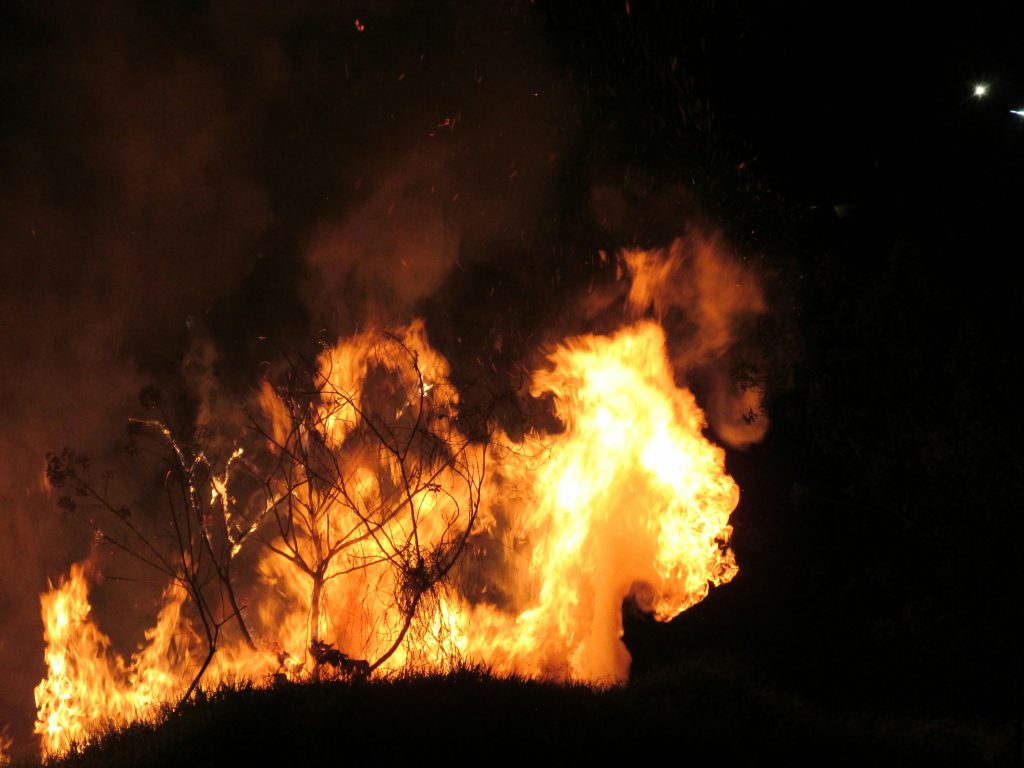
The impacts of surpassing this threshold will be profound. According to the report, they will include, “faster sea-level rise, a higher likelihood of collapse of ecosystems such as coral reefs, more extreme heat and wildfires, and profound changes to the cryosphere.”
The report talks about how we need to approach this from the perspective of overshooting the target, and then rapidly reducing emissions in order to one day fall back below 1.5C. It seems to be the only option on the trajectory we’re on; however, this is unlikely to be an easy thing to do with politicians in charge as they are the ones who made us exceed 1.5C – despite 38 years of scientific warnings.
The reality is that we’re on track for 2.6C of warming according to Climate Action Tracker. That’s the trajectory politicians have put us on. So, to overshoot 1.5C and then suddenly reign ourselves in before going too far above, feels nearly impossible (to me at least) with our present system of electoral politics.
There is another major risk that the report talks about. It mentions that exceeding 1.5C will result in major impacts, some of which will be reversible (e.g. ice cover may return when temperatures come down). However, other impacts may be irreversible such as ecosystem collapse, with the Amazon rainforest named as one such ecosystem.
We know from the national security assessment on biodiversity loss and ecosystem collapse, that we’re already living through ecological collapse. The assessment states, “ecosystem degradation is occurring across all regions. Every critical ecosystem is on a pathway to collapse (irreversible loss of function beyond repair).”
Now the UN has acknowledged that this may be irreversible as we exceed the 1.5C threshold. What this means is that a lot of suffering, starvation, migration and death is more or less inevitable now. We are going to witness the collapse of key natural habitats, losing many species in the process, and threatening the survival of societies dependent on them. In the case of the Amazon rainforest – the lungs of the world – this will affect all of us.
Depending on how far above the 1.5C target we go (for example if we end up hitting 2.6C of warming or more), then we are pretty much guaranteed to exceed several climate tipping points. Much like a stack of dominoes, once one of these goes, it will likely cause the next one to go as part of a chain reaction. One of these tipping points will likely involve the Atlantic Meridional Overturning Circulation (AMOC), which may shutdown or collapse around 2050.
Humanity may find a way to survive some of these tipping points like AMOC collapse, but civilisation in its present form will no longer exist. In western Europe (especially including the UK), winters will become chillingly cold with ice present across large areas. In the summer, this region will be even warmer than it is today. Thus, it will be impossible to grow crops outdoors in these extreme conditions and it’s likely many people will migrate. But, where will they go? Large areas of the world which are set to become uninhabitable as a result of climate breakdown. The irony is that Europe – the continent with strong anti-migrant sentiment, may end up being the source of future migration.
Climate breakdown and the polycrisis
That we face climate tipping points and climate chaos in the short to medium term is incredibly depressing. That we also face a host of other unaddressed issues such as the accelerating AI crisis, escalating global conflicts, and an increase in nuclear weapon rearmament, amongst many other problems is dispiriting to say the least.
This conglomeration of risks has been called the polycrisis (which you can read about here). The impacts of these entangled risks will compound and amplify one and other – to the extent that it may become impossible to fix the mess by ‘only’ addressing any one of the major issues we face. We likely need ALL of the big issues to be addressed simultaneously. As mentioned previously, this is unlikely to happen with politicians in charge as they have either caused or exacerbated the majority of big problems facing society today.
The polycrisis almost feels too big for humanity to deal with. There are so many obstacles in the way, and those obstacles tend to have power or money (or both) behind them. I struggle to see how civilisation will make it through this century if we’re already breaching the 1.5C climate target at this point; that was a target we were meant to avoid hitting by 2100… We’ve exceeded it more than 70 years early. And we’ve done so despite the ICJ ruling that governments have a responsibility to act on the climate crisis. At this rate, we will hit 2.6C on the trajectory we’re on, and possibly go even higher. Civilisation simply won’t be able to adapt – at least not all of the 8.3 billion people alive today. This doesn’t even address the rapidly worsening AI crisis, with some AI experts warning that the chance of AI leading to human extinction could be similar to a coin toss. A 50/50 chance then that tech corporations will end human life on earth.
As Luke Kemp writes in Goliath’s Curse, “It is hard to see how we can escape without a global collapse unfolding.” He lists predictions from a range of experts and says that, “Averaging these experts’ opinions gives us a one in three chance of facing a global collapse, or something far worse, by the end of the century.”
Politicians have put us on this path to ruin.
Conclusion
The world is in a pretty terrible predicament as a result of human behaviour, which has been shaped by politicians and governments. The polycrisis will likely overwhelm humanity in this defining century based on how things are today. That being said, there is a closing window of opportunity left to change course and shift our trajectory. I believe it can be done, but I don’t believe it will be done by politicians.
I think we will need to try something different in the form of permanent participatory democracy, which is a citizen-led form of governance. It has a precedent from ancient Athens where it worked for 200 years and only came to an end after they were invaded by a larger army.
With a switch to this form of governance, anything could be possible. Without this switch, I despair for the future, I despair for today’s children and grandchildren, and I despair for the unborn who will be entering a world on fire. A world in which any moment could witness human extinction if tech corporations build superintelligence which won’t have any need for humans to exist.
We can create a better future together. The alternative is too soul-destroying to contemplate. The choice we have is straightforward, even though the path may not be. I believe that as citizens we are the key to the polycrisis and together we can overcome the odds stacked against us. The responsibility rests on our shoulders to change the way we are governed and to bring about a better future. Everything we care about depends on it.
I’ve been writing about the climate emergency since 2016, and the AI crisis since 2023. I write all my own work, without the use of AI. I don’t publish on any other paid platforms, and my blog remains completely free to read. If you’ve found my writing informative and if you’d like to support my work, I’d be really grateful if you did so here. Thank you.
My cli-fi children’s picture book, Nanook and the Melting Arctic is available from Amazon, including Amazon UK and Amazon US. My eco-fiction children’s picture book, Hedgey-A and the Honey Bees about how pesticides affect bees, is available on Amazon’s global stores including Amazon UK and Amazon US.