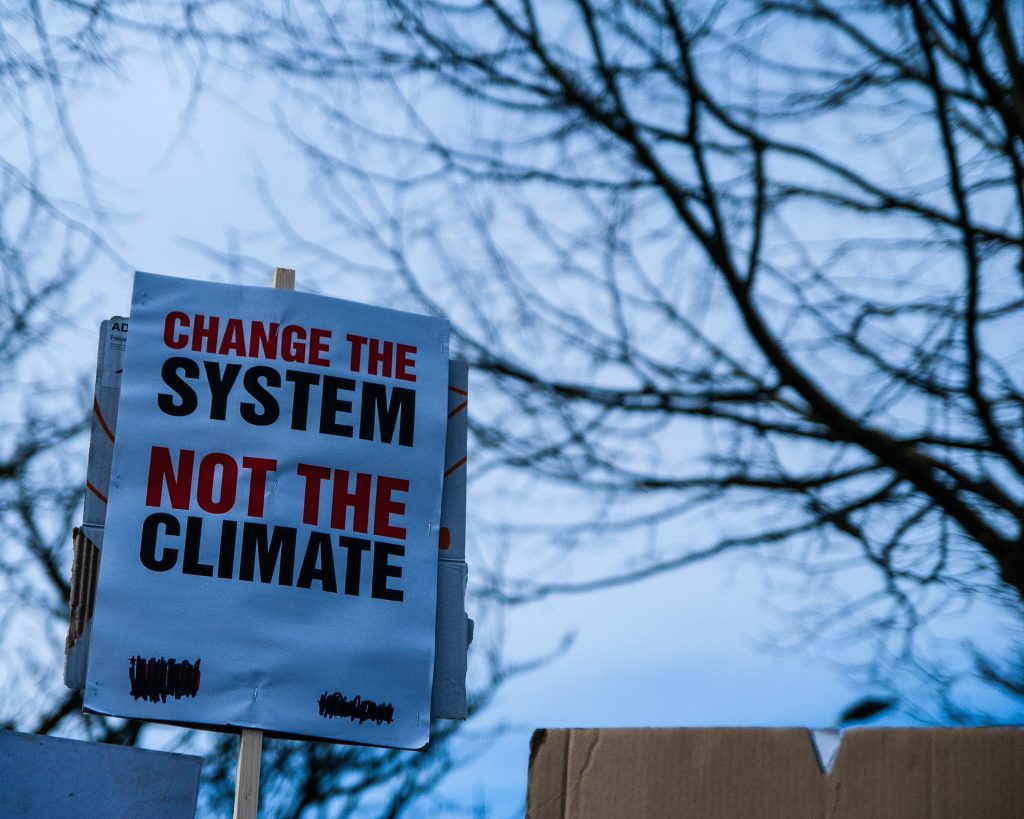
The COP31 summit has concluded in Antalya, Turkey. It ran from the 9th November to the 22nd November 2026. In doing so, it became the longest COP summit in history. The summit was jointly hosted by Turkey and Australia, with Australia chairing the conference.
Many of these climate summits have been let downs, but perhaps this was the biggest betrayal to date. Before we get to that, it’s worth recapping what’s happened over the last twelve months.
It’s been a wild year since COP30. El Niño caused a ton of extreme weather events around the world (The Guardian provided a concise summary of them here), with multiple heatwaves, droughts, and wildfires in the UK alone. A team led by Dr James Hansen said, “The abnormal El Nino strength is itself likely human-driven.”
The UN finally admitted what scientists have said for years, that the 1.5C climate target laid down in Paris in 2015, is no longer possible to achieve. The ICJ’s verdict on climate from 2025, was also formally backed by the UN General Assembly in May 2026. Whilst not legally binding, it provides potential grounds for climate lawsuits against governments who fail to take climate action. On the subject of the UN, the secretary-general, António Guterres is leaving his post shortly, which is a great shame as he’s been the most outspoken secretary-general on the climate emergency. He never held back from calling out those responsible for putting humanity in this hellish position, and his voice will be sorely missed.
More scientists raised concerns of an AMOC tipping point around mid-century. Should this come to pass it would radically alter the world’s climate and destabilise civilisation as we know it. The world is heading rapidly towards climate chaos, the likes of which our species has never experienced.
As if we didn’t have enough on our hands, the AI crisis is rapidly worsening and threatens to supersede climate breakdown as the most urgent issue facing humanity. There’s been a growing chorus of voices warning that superintelligent AI may cause human extinction, and that this may happen at any moment. The parallels between tech companies and fossil fuel companies have become too pronounced to ignore. People like myself are struggling to plan for a future that may no longer exist.
To add fuel to the fire, The Lancet, one of the world’s most respected medical journals published their findings from a commission on global health threats. This esteemed journal warned that AI could lead to “human extinction,” and that the climate crisis is a threat to “human survival.”
The convergence of so many existential and civilisation-threatening issues have been collectively termed as the polycrisis, where the risks from each issue compound one and other, creating even bigger problems. Humanity has failed to tackle the climate crisis since Dr James Hansen’s warning in 1988, despite having 31 global summits in the intervening 38 years. The chances of us tackling this issue seem slight. The chances of us tackling both the climate and AI crises together seems almost impossible with the lack of political will around the world.
Given that superintelligence could be developed at any moment, we have no way of knowing if we’ve reached the end times. But it certainly feels like we’re at the start of them. On which note, let’s talk about the disaster that was COP31.
Before COP31
The build up to COP31 felt almost non-existent. That it was being hosted by Turkey and Australia – both of which rely heavily on coal, one of the most polluting forms of fossil fuels, felt ominous. Given that the USA, one of the world’s largest emitters, wasn’t at the conference due to Donald Trump pulling out of the Paris agreement, that sinking feeling was somewhat justified.
Fiona Harvey wrote in the Guardian that Australia led on the “just transition”, while Turkey took the lead on the “action agenda.” Australia’s focus was on things like finance for loss and damage, moving workers out of the fossil fuel industry and into clean energy, as well as cutting emissions. Meanwhile Turkey looked at electrification and reducing waste.
COP31 Begins
On the first day of the conference, the World Meteorological Organization (WMO) released its State of the Climate Report for COP31. The findings were very bleak, and included the following key messages:
- CO2, nitrous oxide, and methane concentrations hit record levels in 2025.
- Heat is building up at a faster rate and has hit record highs in 2025.
- Ocean heat hit a record last year.
The next day, Greta Thunberg warned that “everything and everyone we love is at stake.” She followed this up a couple of days later saying that “No one is coming to our rescue,” and that Earth is “not dying, it is being killed and we know by who.”
On the 11th November, UN Secretary-General António Guterres made a speech at his final COP summit. Some notable quotes include:
- “Our first climate duty is to tell the truth. The brutal truth is that the climate crisis is outrunning us.”
- “Climate disasters are pounding lives, livelihoods and economies across the globe. This is the path to mutually assured destruction.”
- “Science is not telling us to surrender. It’s telling us to fight harder.”
- “We are in the fight for our lives and our children’s future.”
- “Fossil fuels must go the way of the dinosaurs. But that won’t happen on its own. The dinosaurs did not have a lobby. But fossil fuels do. And their strategy is simple: Distort the science. Delay the policy. Delay the action. Delay the accountability.”
- “We need an extraordinary acceleration. Our planet is heating up. The clock is winding down. It’s make or bake time.”
- “Those who profit most from fossil fuels must help foot the bill for the damage they have caused.”
- “In the last quarter alone, the nine largest oil companies pocketed $95 billion in profits. Meanwhile, the Loss and Damage Fund has received around $600 million. That is what these companies made in about 14 hours. It’s time for governments to tax these windfall profits – and use them to help vulnerable countries recover. Polluters must pay.”
Meanwhile Climate Action Tracker released its annual update for the COP summit. Based on our trajectory we’re heading for around 2.7C of warming by the end of the century. This is enough warming to upend society as we know it. Even if we somehow shifted onto a better trajectory, where every climate pledge was fulfilled and all policies were enacted, Climate Action Tracker predicts we’d still be headed for 1.9C of warming by the end of the century. To understand how devastating this level of warming is, one needs to read Mark Lynas’s book Our Final Warning.
It’s unsurprising then that some climate scientists in attendance felt that progress was being reversed, and the mood was one of deep concern.
Compounding matters, an analysis revealed that 103 corporations and groups were in attendance which have direct links to fossil fuels. This is a deeply depressing and recurring theme from COP summits. Every year delegations from the fossil fuel industry are welcomed into a summit to influence whether or not their deadly products are reined in. It’s beyond me why this madness is still being allowed in 2026.
700 lobbyists turned up at COP31 to push for carbon capture and storage (CCS), which is a method that simply isn’t worth pursuing given its inefficiency. CCS is pushed by the fossil fuel industry because it lets them continue emitting more heat-trapping pollution, and ‘absolving’ themselves through CCS, which can’t remove anywhere near enough carbon. All in all, this fallacy isn’t the magical solution the fossil fuel industry pretends it is and shouldn’t be a primary pillar of climate action. Rather, we need to focus on transitioning away from fossil fuels entirely, and we need to do this as urgently as possible.
On the topic of lobbyists, DeSmog identified 260 lobbyists at COP31 who represented biofuels, fertiliser, meat, and the wider food industry. This number was larger than the number of delegates from certain countries. It’s difficult to reform food systems when those responsible for profiting from the status quo have so many seats at the decision-making table.
At his final COP press conference on the 13th November, UN Secretary-General António Guterres gave an emotional speech. Some highlights included:
- “For nearly ten years as Secretary-General, I have tried to speak the truth about climate change. Sometimes that truth has been uncomfortable. Sometimes it has been unwelcome. But my responsibility has never been to make the facts more convenient. It has been to tell the truth rooted in the science, and to be especially clear when the truth is hard. Facts are facts.”
- “The fact is climate change does not stay in its lane.”
- “Climate action is central to every aspect of the work of the United Nations. You cannot build peace on a burning planet.”
- “You cannot promise young people a better future while destroying the natural systems on which that future depends.”
- “We are heading for an overshoot as far as the eye can see – with temperatures above 2.5 degrees by the end of the century. And that is a recipe for catastrophe.”
- “We must confront the disproportionate influence of the fossil fuel lobby. The future of our planet cannot be negotiated on the terms of those profiting from its destruction.”
- “We share one planet – and whether we like it or not, we share one fate.”
- “Face the facts. Follow the science. Choose the future. And never give up.”
An analysis going back to 1850, identified three countries as being the biggest exporters of carbon dioxide in history: Russia, Saudi Arabia, and Australia. Most studies assess where emissions arise, but not the source country of the fossil fuels (e.g. where the coal, oil, or gas actually came from). Russia, Saudi Arabia, and Australia are most at blame in this context.
Outcomes of COP31
The muted anticipation ahead of COP31 was a sign of things to come. Civil society groups went on to label this the “worst Cop ever,” which is quite a statement given that we’ve had 31 of them and none have delivered the climate action we urgently need. Other activists said it was the most “disappointing” in COP history. As such, positive outcomes were few and far between.
Electrification was a big topic at this summit. The idea is for more countries to derive their energy from electricity (using clean/renewable energy) to help drive down emissions. China committed to get 35% of their energy from electricity by 2035 – the so called 35 x 35 goal.
A group of countries including Kenya, South Sudan, Spain, Timor Leste, UK, Tuvalu, and Vanuatu, signed a statement calling for levies on polluting sectors including the flight industry and crypto. Meanwhile 30 countries remain signed up to the Fossil Fuel Non-Proliferation Treaty Initiative. During a conference for this initiative, Panama’s Environment Minister made the comments that a “petroleum mafia” is holding the world hostage. Panama also made it clear they wouldn’t support any outcome that doesn’t limit oil production.
COP31 Ends Without an Agreement
On Monday 16th November, a draft agreement was put together and circulated amongst delegates. This agreement would have been known as the “Antalya pact.” It included the phrase, “Calls for accelerated action to phase out fossil fuels, including through the immediate transition away from fossil fuels in energy systems.” The first time a transition away from fossil fuels was mentioned was at COP28 (yes, it took 28 years of attempts to mention the source of the problem!) After COP28, this phrase didn’t appear again at subsequent summits, so it was surprising to see it in an early draft at COP31… The draft document (available here) was 18 pages long. Some highlights included:
- “Acknowledges that the Paris Agreement is working… and that significant collective progress towards the Paris Agreement temperature goal has been made, from an expected global temperature increase of more than 4 °C according to some projections prior to the adoption of the Agreement to an increase of around 2.6 °C based on the full implementation of national climate plans.” This statement is laughable in many ways. The Paris Agreement aimed to limit warning to ideally below 1.5C and no more than 2C. In this paragraph, they say that the Paris Agreement is working because we’re destined for 2.6C of warming? In what world is 2.6C of warming below 2C? I posed this question to the Guardian’s journalists Fiona Harvey and Ajit Niranjan, and you can see their answers here.
- “Expresses deep concern for scientific findings on 1.5°C overshoot and that global efforts remain insufficient to keep 1.5°C within reach.” See my comments above about the absurdity of claiming that the Paris Agreement is working. Worth noting that this is the first COP summit to acknowledge that the 1.5C target has been breached, according to Fiona Harvey’s piece in The Guardian.
- “Reaffirms resolve to pursue efforts to limit the temperature increase to 1.5°C, to limit both the magnitude and duration of any temperature overshoot, and to close adaptation gaps.” As the UN Secretary-General António Guterres acknowledged, it’s no longer possible to stay below 1.5C. And yet, politicians are still clinging to this target which has already been breached. As a reminder, Climate Action Tracker announced that we’re on track for 2.7C of warming. 1.5C is gone. What they’re hoping for is that we overshoot 1.5C and then bring emissions down at some point in the future, to settle back under 1.5C. But as we’re heading for 2.7C, actions aren’t consistent with this rhetoric.
- “Recognizes that developed countries should take the lead, including the call to achieve net zero emissions by 2030 and net-negative emissions by 2040.” This is quite a bold statement given that hardly any countries are on track for net zero by 2030.
- “Calls on Parties to contribute to, taking into account the Paris Agreement and their different national circumstances, pathways and approaches, global efforts to accelerate Carbon Capture, Utilization and Storage to at least 500 MtCO2 reflecting current policies by 2035, and to work towards 1.3 to 2.5 Gt CO2 per year by 2035.” The lobbyists for CCS got their way in the draft text. It’s amazing what money can buy, including text based on the wishes of the fossil fuel industry.
- “Calls for accelerated action to phase out fossil fuels, including through the immediate transition away from fossil fuels in energy systems.” This is exactly what we needed at the COP1 summit. But instead, we got it in the draft text at
COP5,COP10,COP15,COP20,COP25,COP30, COP31. Technically we got the “transition away” phrase at COP28. But did it make the final agreement text for COP31? That’s the big question! And the answer?
The answer is no. The reason? Because COP31 ended in complete failure as a consensus wasn’t reached on a final text, so there was no final agreement. The sticking point was the text around fossil fuels, with petrostates refusing to let the text appear in the agreement, whilst other nations insisted on keeping it in.
The first sign of discord came when an updated draft of the agreement was released on Thursday 19th November. Instead of transitioning away from fossil fuels, the updated draft talked about transitioning to “low greenhouse gas emissions and climate-resilient development.” Classic cop out (if you’ll pardon the pun). To read a breakdown of the updated draft agreement, Fiona Harvey wrote a fantastic piece in The Guardian explaining what each section of the text means.
France launched a desperate bid to get the original fossil fuel wording back in, but this was unsuccessful. According to The Guardian, the EU is believed to have had 130 countries behind it to get “fossil fuels” back into the text. This attempt was also unsuccessful.
Due to the lack of consensus on the text, the summit overran its Friday deadline and continued well into Sunday and became the longest running COP in history. Still no agreement could be reached as petrostates like Saudi Arabia refused to let fossil fuels be kept in the text. Which in 2026 – nearly four decades after Dr James Hansen’s warning about climate breakdown, feels like sheer stupidity.
The summit ended on that dour note. Two weeks of negotiations, involving tens of thousands of people from around the world – achieving nothing. This is beyond frustrating. We’ve been betrayed by elected politicians, who have put the interests of the lobbyists over that of society. In this context, part of me thinks that no agreement is better than a bad agreement. Maybe this will serve as a wake-up call for those nations hellbent on bringing about climate chaos – that they’re in a minority and have more than 130 countries who are fighting back against them. Maybe this will galvanise real change. Then again, maybe it won’t. We are 31 years in at this point, and the actions of these representatives is telling us very clearly that change won’t be coming from them.
Conclusion
It’s highly questionable whether these COP summits are fit for purpose. This was COP31 – the world’s 31st annual attempt to tackle this crisis. And yet at this moment of extreme peril, this record-breaking lengthy summit wasn’t able to agree on a final text because mentioning the source of the problem was too contentious. People were so disappointed by the sheer lack of urgency and progress, that the summit was labelled as the “worst” in history.
It’s depressing and heartbreaking to witness governments play politics while climate and ecological collapse results in widespread disasters and extreme weather events around the world. We are watching our futures being destroyed with seeming indifference by a cohort of “world leaders” who aren’t fit to be in office at this pivotal moment. I mentioned at the start of this blog, that it’s questionable whether we will tackle the climate emergency or the AI crisis in time. But the chances of us acting on both simultaneously? It seems unlikely. This is one of the reasons why the Bulletin of Atomic Scientists set the Doomsday Clock at 85 seconds to midnight in their 2026 update, the closest we’ve ever been to catastrophe.
The worst aspects of human nature in a few powerful individuals threaten to ruin everything for 8.3 billion people. We remain on track for 2.7C of warming by the end of the century – enough to bring about catastrophe that will result in billions of deaths and a miserable life for those that remain.
How much longer will the 8.3 billion citizens allow politicians to threaten our survival? I’ve previously said that politicians either need to step up and do what’s necessary, or they should step aside for people who will. They’ve chosen to do neither. I believe we now have a critically urgent task ahead of us to completely reform our democracies to enable us to avert civilisational collapse.
I believe we have a viable alternative at our disposal and we need to explore whether we wish to replace the broken system of electoral politics with participatory democracy. This alternative form of democracy puts citizens in the decision-making seats. Modern examples include citizens’ assemblies (see my previous posts on assemblies here and here), citizens’ juries, and participatory budgeting. In citizens’ assemblies they listen to experts and stakeholders on individual topics, deliberate together about what they’ve heard, before voting on recommendations. To date, this has been extremely effective as far as the assembly process goes. The downside has been that these processes often aren’t legally binding, and as such politicians can ignore the extremely well thought out recommendations.
But what if we replaced our entire representative democracy with permanent citizens’ assemblies for example? It’s not as far out an idea as some may imagine. In Ancient Athens, their democracy was run by a few assemblies and this continued successfully for around 200 years until an invasion brought this era of citizen-led democracy to an end. Even Aristotle said that democracy is based on sortition (randomly choosing citizens to participate in assemblies), whereas elections were linked to oligarchy.
I feel that the outcome of COP31 is a clear example of why we urgently need to consider a switch to permanent participatory democracy at a national and international level. For time is running out, and many experts and leaders such as António Guterres have said that we’re heading for “catastrophe.” We don’t have time for another 30 years of failed climate summits. We don’t have time for 10 years of failed AI summits. These issues require urgent action and I fear we may be about to cross a threshold from which there will be no return.
I have no way of foretelling whether a switch to permanent participatory democracy will save us. But I do believe that after decades of global failure, politicians won’t. So, perhaps this might be worth a try as our last-ditch attempt to bring about meaningful change in the world. I see few other avenues offering hope.
I’d like to end by extending my sincere thanks to the Guardian Environment team, who are without a shadow of a doubt the leading desk covering the climate emergency. Much of this blog references their articles, and I’m sincerely grateful to the Guardian’s unwavering commitment to cover the most important issues of our time.
I’ve been writing about the climate emergency since 2016, and the AI crisis since 2023. I write all my own work, without the use of AI. I don’t publish on any other paid platforms, and my blog remains completely free to read. If you’ve found my writing informative and if you’d like to support my work, I’d be really grateful if you did so here. Thank you.
My cli-fi children’s picture book, Nanook and the Melting Arctic is available from Amazon, including Amazon UK and Amazon US. My eco-fiction children’s picture book, Hedgey-A and the Honey Bees about how pesticides affect bees, is available on Amazon’s global stores including Amazon UK and Amazon US.